
Brick Bond Guide

Home – Bricklaying – Brick Bond Guide

Bricklaying Guide

How the Bricks Are Laid Matters

A bond is the pattern in which bricks are laid so that the vertical joints do not line up from one course to the next. It spreads load through the wall and gives brickwork its character. Choose a bond below and watch it being laid course by course.

Highlight

Stretcher Bond

Running bond

Every brick is laid lengthwise, and each course is offset by half a brick from the course below.

The look
Clean horizontal lines and the most familiar brick pattern.
Often used for
Single-skin walls, cavity walls and brick veneer: the standard for most modern residential and commercial brickwork.
Good to know
The half-brick overlap spreads load across the wall. In a cavity wall, wall ties (not brick headers) connect the two skins.

Stack Bond

Stacked bond

Bricks sit directly on top of one another, so the vertical joints line up in a straight grid.

The look
Contemporary and architectural: a precise grid of rectangles.
Often used for
Feature walls and contemporary facades where a clean, linear look is wanted.
Good to know
With no overlap between courses, a stack bond wall usually needs reinforcement in the bed joints and careful movement-joint planning.
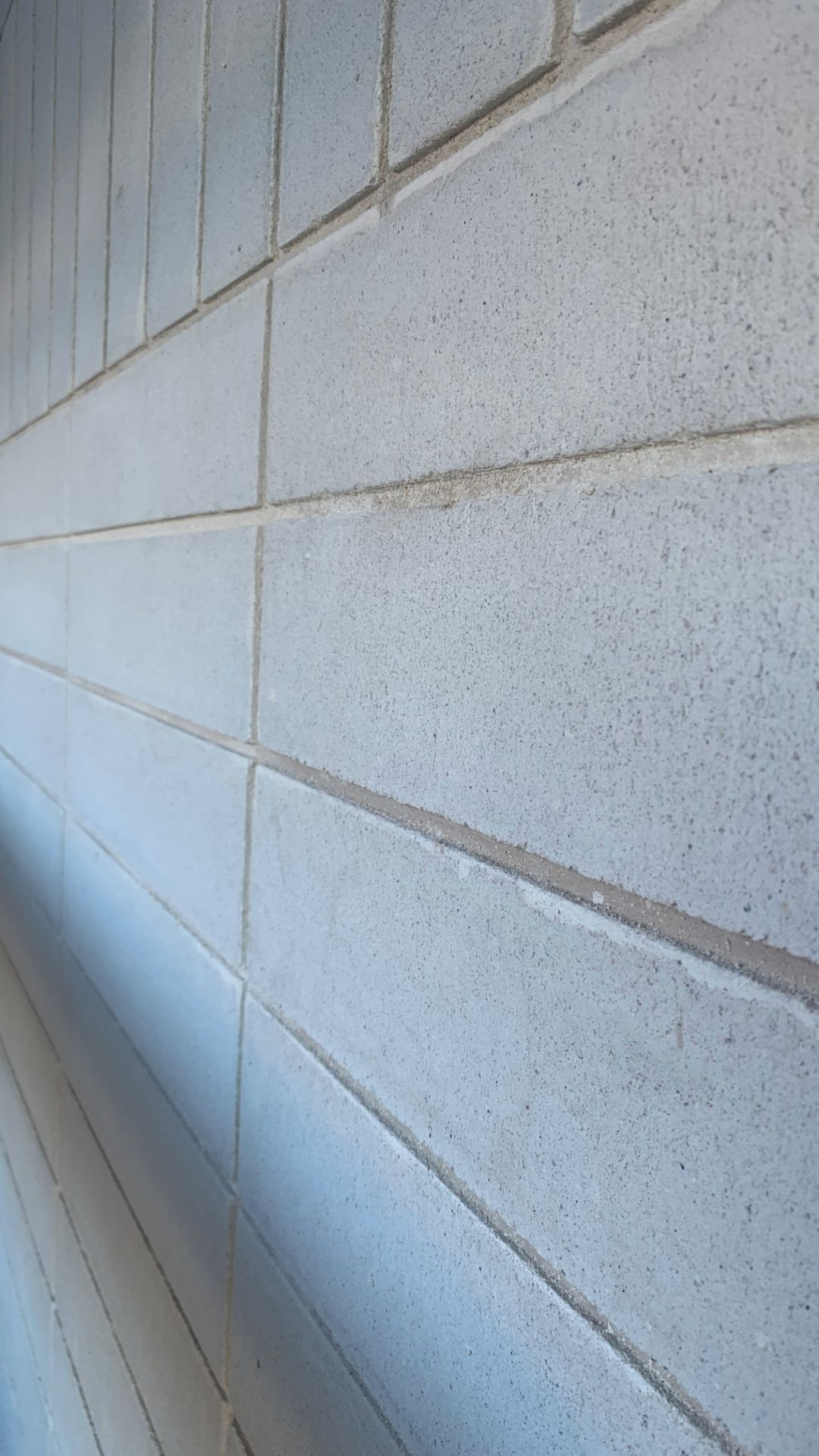
GB Porcelain stack bond project in Tamarama
On siteGB Porcelain, Stack Bond · Tamarama

English Bond

Alternating courses

Courses of stretchers alternate with courses of headers all the way up the wall.

The look
Strong horizontal banding with a traditional, solid appearance.
Often used for
Heritage buildings, garden and retaining walls, and restoration work where the original pattern has to be matched.
Good to know
The header courses tie the wall across its thickness, which is why English bond is traditionally linked with solid, load-bearing walls.

Flemish Bond

Alternating bricks

Stretchers and headers alternate within every course, with each header centred over a stretcher in the course below.

The look
A decorative, chequered rhythm; headers are often shown in a contrasting colour.
Often used for
Heritage-style homes, garden walls and feature brickwork.
Good to know
It needs careful setting-out and more cut bricks than stretcher bond, so it is a craft choice rather than the economy choice.

Header Bond

All headers

Every brick is laid with its short end facing out, and each course is lapped by half a header.

The look
A fine, dense texture of small square faces.
Often used for
Curved walls with a tight radius, because the short faces follow the curve easily, and decorative panels.
Good to know
It uses roughly twice as many bricks per square metre of wall face as stretcher bond.
StretcherA brick laid lengthwise, showing its long face.
HeaderA brick laid with its short end showing.
CourseOne horizontal row of bricks.
Bed jointThe horizontal mortar joint a course sits on.
PerpendThe vertical mortar joint between two bricks.

Brick bonds at a glance

BondHow it is laidOften used forThe look
Stretcher BondEvery brick is laid lengthwise, and each course is offset by half a brick from the course below.Single-skin walls, cavity walls and brick veneer: the standard for most modern residential and commercial brickwork.Clean horizontal lines and the most familiar brick pattern.
Stack BondBricks sit directly on top of one another, so the vertical joints line up in a straight grid.Feature walls and contemporary facades where a clean, linear look is wanted.Contemporary and architectural: a precise grid of rectangles.
English BondCourses of stretchers alternate with courses of headers all the way up the wall.Heritage buildings, garden and retaining walls, and restoration work where the original pattern has to be matched.Strong horizontal banding with a traditional, solid appearance.
Flemish BondStretchers and headers alternate within every course, with each header centred over a stretcher in the course below.Heritage-style homes, garden walls and feature brickwork.A decorative, chequered rhythm; headers are often shown in a contrasting colour.
Header BondEvery brick is laid with its short end facing out, and each course is lapped by half a header.Curved walls with a tight radius, because the short faces follow the curve easily, and decorative panels.A fine, dense texture of small square faces.

Brick bond questions

What is the most common brick bond?

Stretcher bond (also called running bond). It is quick to lay and suits modern cavity and veneer walls, where wall ties rather than brick headers connect the layers.

Which brick bond is the strongest?

In solid, load-bearing walls, English and Flemish bond are traditionally considered strongest because their headers tie the wall across its thickness. In modern cavity construction, stretcher bond is standard and wall ties do that job.

What is stack bond used for?

Stack bond gives a contemporary grid look, so it is popular for feature walls and modern facades. Because the joints line up, it usually needs reinforcement and good movement-joint planning.

Can a new wall match an existing bond pattern?

Matching the existing bond, brick and joint finish is the key to a seamless repair or extension. Send photos of the wall with your enquiry and we will talk it through.

Not sure which bond suits your project?

Tell us about your project and send photos if you have them. We will talk you through the options.